About each scene
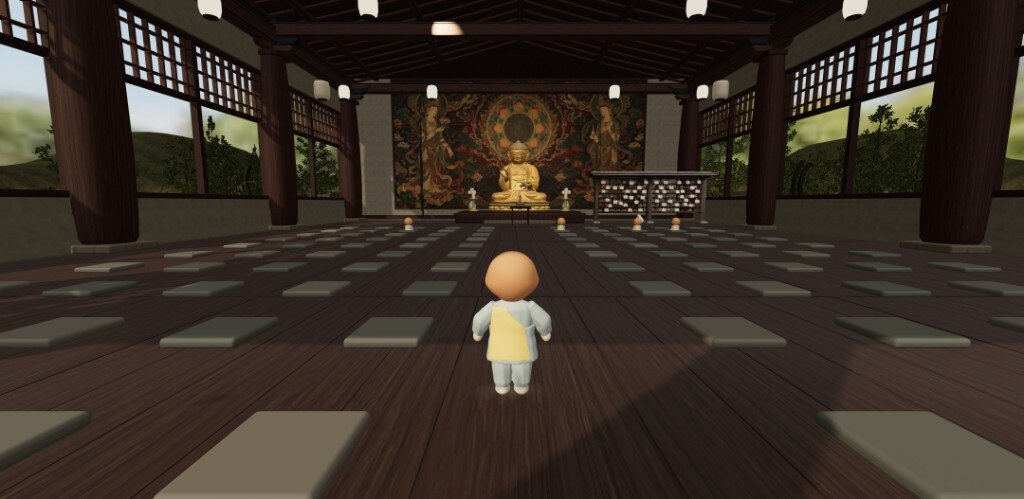
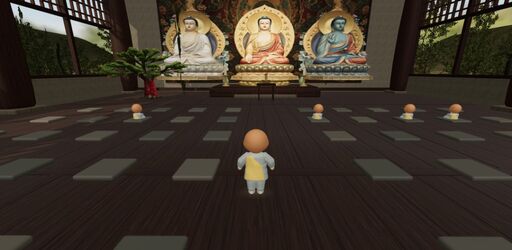
Yun Tang is not a copy of one real temple. It is Sansa Temple’s own main hall—gathering the familiar wood hall, cushions, lanterns, and courtyard feeling of Chinese Buddhist temples into a place you can enter anytime. The name blends “cloud” and “tang” (hall), inviting you to rest awhile rather than rush through.
Origin & play
·
Enter Yun Tang
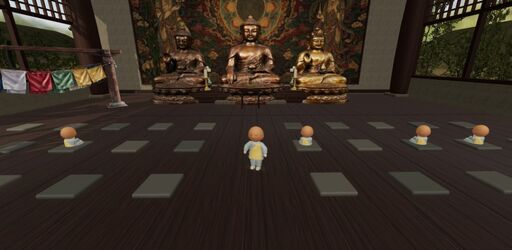
Yonghe Temple (Yonghe Gong) stands in Beijing’s Dongcheng District. Built in 1694 as the mansion of Prince Yong (later the Yongzheng Emperor), it became an imperial travel palace, then in 1744 a Tibetan Buddhist monastery—one of Qing Beijing’s great lama temples, mixing Han and Tibetan styles, famed for the Maitreya statue in Wanfu Pavilion. This Sansa scene is an online homage: a wide hall, three Buddhas, and prayer-flag mood—not a laser scan of the real site.
Origin & play
·
Enter Yonghe Temple
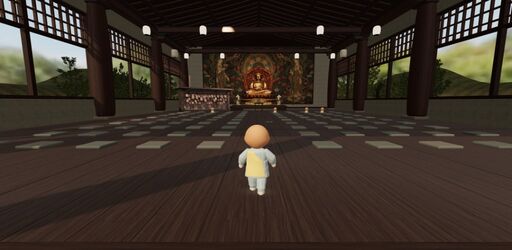
Lingyin Temple sits by Feilai Peak northwest of West Lake in Hangzhou. Tradition says the Indian monk Huili founded it in 326 CE; the name means “retreat of the immortals’ spirits.” It is a major Jiangnan Chan monastery, rebuilt across dynasties beside grottoes and Cold Spring. This scene borrows that mountain-temple calm—wood hall, golden Buddha, hills beyond the windows—as a place to walk slowly and leave one soft wish.
Origin & play
·
Enter Lingyin Temple
Hsi Lai Temple (Fo Guang Shan) is in Hacienda Heights, California. Founded under Venerable Master Hsing Yun’s Fo Guang Shan, it was built through the 1980s and consecrated in 1988—one of North America’s largest Chinese Buddhist monasteries. “Hsi Lai” means “Dharma coming West.” The palace-style campus serves practice, culture, and community. This scene honors that overseas hall: three Buddhas, bright side windows, and an open nave you can enter anytime.
Origin & play
·
Enter Hsi Lai Temple
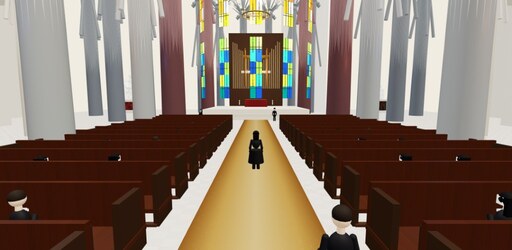
Familia is not a replica of one church. It is Sansa Temple’s “quiet nave,” borrowing the lift of European cathedrals—especially the breath-slowing look-up of places like the Sagrada Família. No liturgy, no checklist: only sit and listen awhile with strangers.
Origin & play
·
Enter Familia
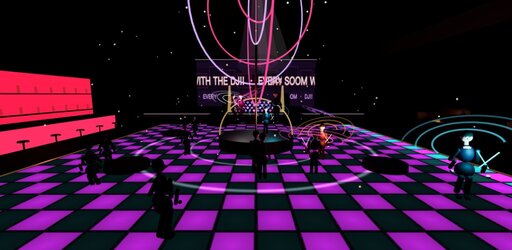
Club is an original Sansa corner for everyday joy. Temples hold silence; this small floor holds light and rhythm—so after bowing and wishing, you can still move a little with others. It isn’t a real nightclub; it’s simply “sway together” in the same world.
Origin & play
·
Enter Club
Waitduck is an original Sansa leisure scene. The name hints at waiting and drifting: after long temple time, you may want a lighter body—so you become a duck among bridges, lotuses, and rafts made for daydreaming. It isn’t one real park map; it’s “slow motion on water” shared with others.
Origin & play
·
Enter the pond
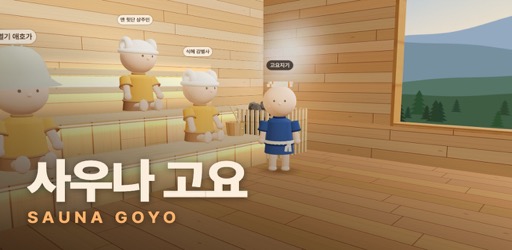
Sauna Goyo is an original Sansa leisure hall inspired by Korean and Japanese sauna culture—especially the totonou loop of sauna → cold bath → outdoor rest. It isn’t one real spa map; it’s a free 3D place to sit, pour water on the stones, soak, and share quiet warmth with strangers.
Origin & play
·
Enter Sauna Goyo
FAQ
Which scenes does Sansa Temple have?
Yun Tang (main hall), Yonghe Temple, Lingyin Temple, Hsi Lai Temple, Familia cathedral, Club dance floor, Waitduck Pond, and Sauna Goyo. Each has its own intro page and enter link.
How do I enter a scene?
Open this page or a scene intro, then tap Enter. You’ll go to /?room=id&instance=0. Works in mobile and desktop browsers—no install.
What can I do inside?
Temples: walk, bow, beads, wish wall. Familia: sit and hear the organ. Club: dance. Waitduck: swim as a duck. Sauna Goyo: sauna, cold bath, outdoor rest. See each page’s How to play.
Is it free? Do I need an account?
Entering scenes and basic play are free. Open the page to join the multiplayer space with other visitors.
Phone or computer?
Both. Use tap-to-walk on phones; mouse/keyboard on desktop. A modern browser with WebGL is enough.
Are Yonghe / Lingyin / Hsi Lai real temples?
Yes—those pages introduce the real temples’ history, while the 3D rooms are Sansa homages, not exact replicas. Yun Tang, Familia, Club, Waitduck, and Sauna Goyo are original Sansa scenes.
Can I switch scenes without leaving?
Yes. Open the in-game room list and pick another hall—temples, Familia, Club, Waitduck Pond, or Sauna Goyo.
Where is the full guide?
See /guide/ for move, bow, beads, sound, and wish-wall tips. Scene pages focus on origin and casual play for each room.